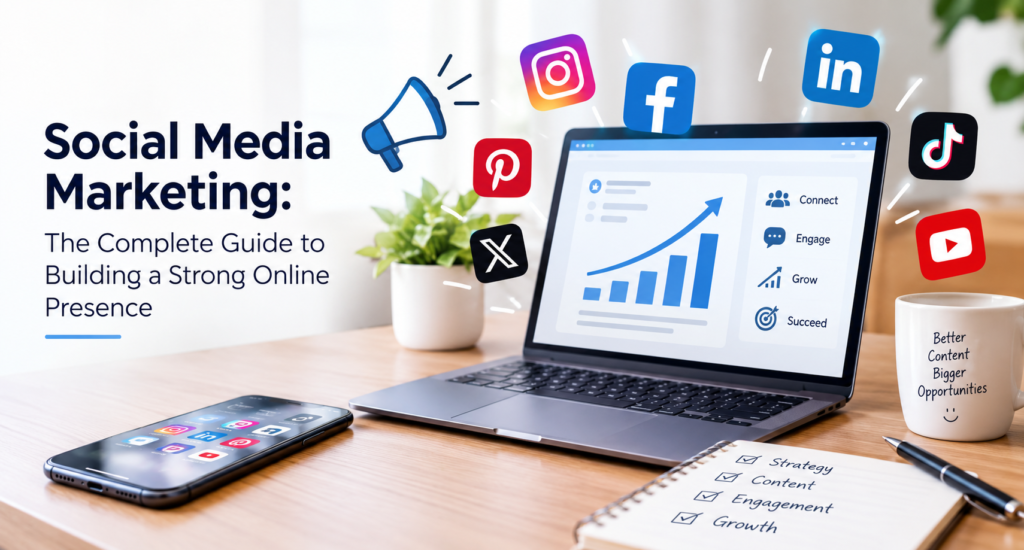
Social Media Marketing: The Complete Guide to Building a Strong Online Presence
In today’s digital landscape, simply having social media profiles is not enough to build a strong and recognisable online presence. Businesses need a clear strategy, consistent branding, valuable content and regular performance analysis to reach the right audience and achieve meaningful marketing results. A well-planned social media marketing strategy can help businesses increase brand awareness, strengthen customer relationships, drive relevant traffic to their websites and generate valuable enquiries. However, effective social media marketing involves much more than posting content regularly. It requires a clear understanding of your target audience, careful platform selection, engaging content creation and ongoing optimisation based on performance data.
What Is Social Media Marketing?
Social media marketing refers to using social networking platforms to promote a business, communicate with customers, distribute content and strengthen online visibility.
It can include a combination of:
- Organic social media posts
- Community engagement
- Paid advertising campaigns
- Video marketing
- Influencer collaborations
- Content distribution
- Customer support
- Brand promotion
Popular platforms include Facebook Ads , Instagram, LinkedIn, YouTube, TikTok, Pinterest and X.
However, businesses do not need to maintain an active presence on every platform. Your choice should depend on your target audience, industry, marketing goals and the type of content you can consistently produce.
How Social Media Helps Businesses
When managed strategically, social platforms can help businesses:
- Increase brand recognition
- Introduce products and services
- Share educational resources
- Communicate directly with customers
- Promote website content
- Generate relevant enquiries
- Build online communities
- Understand customer interests and behaviour
The goal should be to provide value and build relationships rather than making every post a direct sales message.
Why Is Social Media Marketing Important for Businesses?
Social media marketing gives businesses a valuable opportunity to communicate directly with existing and potential customers. Beyond sharing updates, social platforms can support content distribution, customer communication, community building and meaningful industry conversations. When used strategically, they can become an important part of a broader digital marketing plan.
-
Builds Brand Awareness:
Regularly publishing useful and relevant content can help audiences become more familiar with your business. Maintaining consistent visual branding, messaging and tone of voice across social platforms can reinforce brand recognition and create a more cohesive online identity.
-
Strengthens Audience Engagement:
Social media enables two-way communication through comments, direct messages, polls, questions and discussions. By responding promptly and professionally, businesses can encourage conversations, address customer queries and build stronger relationships with their audience.
-
Drives Relevant Website Traffic:
Social platforms can help businesses promote valuable resources such as blog articles, service pages, product pages and helpful guides. Including a clear and relevant call to action can encourage interested users to visit the website, learn more about the business and take the next step.
-
Provides Valuable Audience Insights:
Social media analytics can show which topics, formats and posts attract the most engagement from your audience. Businesses can use these insights to identify content preferences, understand audience behaviour and refine their future content strategy based on measurable performance.
-
Supports Customer Relationships:
Social media provides an accessible channel for answering questions, sharing updates and responding to customer feedback. Consistent and helpful communication can make it easier for businesses to stay connected with their audience throughout the customer journey.
Helps Businesses Stay Ahead of Market Trends:
How to Create an Effective Social Media Strategy
-
Set Clear Marketing Goals
Your goals should be specific and connected to wider business objectives.
Possible goals include:
- Increasing brand awareness
- Generating website traffic
- Improving audience engagement
- Increasing enquiries
- Promoting products or services
- Supporting lead generation
- Building industry authority
Clear goals also make it easier to select appropriate metrics and evaluate performance.
-
Research Your Target Audience:
Before creating content, understand who you are trying to reach.
- Age and location
- Interests and preferences
- Common questions
- Purchasing behaviour
- Professional background
- Challenges and pain points
- Preferred social platforms
- Content formats they engage with
Audience research helps businesses create content based on real needs instead of relying entirely on promotional messaging.
-
Select the Right Social Platforms:
Every platform has its own audience, communication style and content formats. LinkedIn can be useful for professional networking and B2B communication. Instagram can work well for visual content and brand storytelling. YouTube is suitable for tutorials, demonstrations and longer educational videos, while short-form video platforms can support quick, engaging content. Rather than spreading resources across every network, focus on platforms where your audience is active and where your business can consistently maintain quality.
-
Create Content That Provides Value:
Useful content should educate, inform, entertain or solve a problem.
Consider including:
- Educational guides
- Industry tips
- Short-form videos
- Infographics
- FAQs
- Customer stories
- Product demonstrations
- Behind-the-scenes content
- Industry updates
- Blog promotions
A combination of formats can keep your content fresh while allowing you to communicate with different segments of your audience.
Organic vs Paid Social Media Marketing
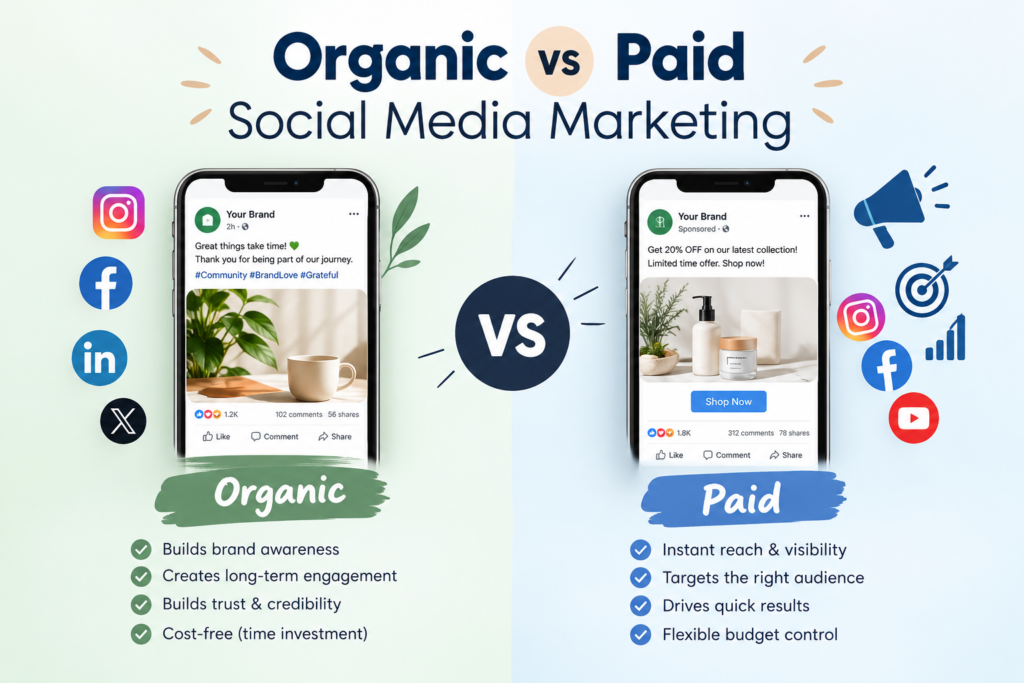
Businesses generally have two main approaches to social promotion: organic activity and paid advertising.
-
Organic Social Media:
Organic marketing includes posts, videos, stories, discussions and other content published without directly paying for distribution.
It can help businesses:
- Maintain regular communication
- Build a community
- Establish expertise
- Share useful information
- Develop long-term audience relationships
-
Paid Social Advertising:
Paid advertising allows businesses to promote selected content or offers to specific audience segments.
Campaigns can support objectives such as:
- Website visits
- Lead generation
- Product promotion
- Event registrations
- Brand awareness
- Enquiries
Organic and paid activity can be used together when each supports a clearly defined marketing objective.
How to Build a Social Media Content Calendar
A well-organised social media content calendar helps businesses plan, create and publish content consistently across different platforms. Instead of deciding what to post at the last minute, a content calendar provides a clear structure for managing topics, formats, publishing dates and campaign activities.
-
Define Your Goals:
Start by identifying what you want to achieve through social media. Your goals might include increasing brand awareness, improving engagement, driving website traffic, generating enquiries or supporting product and service promotion. Clear goals help you create content with a specific purpose.
-
Choose the Right Platforms:
Focus on the social media platforms that are most relevant to your audience and business objectives. Each platform has different content formats, audience behaviours and communication styles, so your content should be adapted accordingly.
-
Create Content Categories
Organise your content into a few clear categories, such as educational posts, industry insights, product or service information, customer-focused content, behind-the-scenes updates and promotional posts. This creates variety and prevents your social feed from becoming repetitive.
-
Plan Your Publishing Schedule
Decide how often you want to publish content and assign specific topics to each day or week. Your calendar can include the content topic, format, platform, publishing date, caption, visual requirements and call to action.
-
Review and Optimise Your Content
Regularly review metrics such as reach, engagement, clicks and enquiries to understand how your content performs. Use these insights to identify successful content themes and improve your future social media calendar.
-
A content calendar should provide structure without becoming too rigid
Leave room for timely topics, industry developments, customer conversations and relevant trends so your social media presence remains useful and responsive.
How to Create More Engaging Social Media Content
Simply publishing content regularly does not guarantee audience engagement. Each post should provide a clear reason for people to stop scrolling, read, watch, interact or take action. Focus on creating content that is useful, relevant and easy to understand.
-
Start with a clear and attention-grabbing headline that reflects the topic.
-
Address a specific audience need or problem and provide useful information.
-
Use simple, conversational language that is easy to understand.
-
Include relevant visuals such as images, videos, infographics or carousels where appropriate.
-
Keep your message focused and avoid unnecessary information.
-
Add a clear call to action that guides users towards the next step.
-
Encourage meaningful conversations by asking relevant questions or inviting opinions.
-
Repurpose valuable content into different formats to extend its usefulness and reach.
Measuring Social Media Performance
Publishing content is only one part of an effective social media marketing strategy. Regular performance measurement helps businesses understand what is working, identify areas for improvement and determine whether their social media activities are supporting broader business objectives.
Important Social Media Metrics:
The most useful metrics will depend on your goals and the platforms you use. Common metrics include:
- Reach – The number of people who see your content.
- Impressions – The number of times your content is displayed.
- Engagement rate – The level of interaction generated by your content.
- Comments – Indicate conversations and audience responses.
- Shares – Show when users find content valuable enough to share with others.
- Saves – Can indicate that users find your content useful for future reference.
- Follower growth – Tracks changes in your audience over time.
- Website clicks – Shows how effectively social content drives visitors to your website.
- Enquiries and leads – Help measure potential customer interest generated through social media.
- Conversions – Track completed actions such as purchases, bookings or sign-ups, depending on your business objectives.
Common Social Media Marketing Mistakes to Avoid
Even with regular posting, businesses may struggle to achieve meaningful results if their social media activities lack direction or consistency. Avoiding common mistakes can help create a more focused and effective social media presence.
-
Posting Without a Clear Strategy:
Publishing random content may create activity without supporting your wider marketing objectives. Before creating a post, consider its purpose, target audience and the action you want users to take. A clear strategy helps ensure that your content works towards specific goals.
Guest Post Hubs Services can support businesses that want to combine content creation, digital promotion and online visibility as part of a broader marketing strategy.
Social Media Trends Businesses Should Watch
Social platforms continue to change as technology, algorithms and user behaviour evolve.
Businesses may want to monitor developments such as:
- Short-form video
- Interactive content
- Creator collaborations
- Personalised experiences
- Social commerce
- AI-assisted content workflows
- Community-focused marketing
Artificial intelligence can help with brainstorming, content planning, research and workflow management. However, human review remains important to maintain accuracy, originality and an authentic brand voice.
Businesses do not need to follow every new trend. Instead, focus on formats and technologies that are relevant to your audience and support your marketing objectives.
How to Build a Sustainable Social Media Strategy
Long-term success usually depends on consistency rather than short-term activity.
A sustainable approach involves:
- Setting measurable objectives
- Understanding your audience
- Selecting relevant platforms
- Planning content in advance
- Maintaining consistent branding
- Engaging with your community
- Tracking meaningful metrics
- Reviewing results regularly
- Improving underperforming content
- Repeating strategies that support your objectives
Frequently Asked Questions
1. What is social media marketing?
Social media marketing involves using social networking platforms to promote content, communicate with audiences, increase brand awareness and support business objectives.
2. Why is social media important for businesses?
It provides businesses with opportunities to communicate with customers, distribute content, build brand recognition, increase website traffic and support lead generation.
3. Which social media platform is best for a business?
There is no single platform that works for every business. The right choice depends on the target audience, industry, content type and marketing objectives.
4. How often should a business post on social media?
There is no universal posting frequency. A consistent schedule that allows you to maintain quality and relevance is generally more useful than publishing excessive content.
5. What type of content works well on social media?
Educational posts, videos, industry tips, FAQs, visual content, customer stories, company updates and relevant promotional content can all contribute to a balanced strategy.
6. Can social media increase website traffic?
Yes. Businesses can use relevant social posts to direct interested users towards blogs, landing pages, product pages and other website resources.
7. What is the difference between organic and paid social media?
Organic social media involves publishing and engaging without directly paying for distribution, while paid social uses advertising budgets to reach selected audiences.
8. How can businesses improve social media engagement?
Create content around audience interests, answer common questions, encourage discussions and respond to comments and messages consistently.
9. Which social media metrics should businesses track?
Useful metrics include reach, impressions, engagement, shares, saves, clicks, follower growth, enquiries, leads and conversions.
10. How long does social media marketing take to produce results?
Results vary according to the business, audience, platform, content quality, consistency and objectives. Regular performance reviews over time provide a more meaningful picture of progress.
Conclusion
Building a strong online presence requires more than maintaining social media profiles. Businesses need audience research, valuable content, consistent branding, meaningful engagement and regular performance analysis. Social media marketing can support brand awareness, customer relationships, website traffic and lead-generation efforts when it forms part of a clear digital strategy.For businesses looking to strengthen their online visibility through content and digital promotion, Guest Post Hubs Services can provide support tailored to broader marketing objectives. Contact us Guest Post Hubs Services today to discuss content and online marketing solutions for your business.